A Tuff Shed is built to keep rain off a lawnmower. It isn’t built to hold a steady temperature and humidity for a person and a few hundred pounds of steel. Once the walls were up, the next problem was the air: too hot, too cold, and for a while, too damp.
A note before going further: this is a Bay Area shed. Our winters rarely drop much below freezing, and our summer heat is dry. If you live somewhere with real winters, humid summers, or big daily temperature swings, the trade-offs below may not hold. Insulation and vapor control matter far more there.
The first problem: wet weights
Before the gable vents went in, the shed sealed up tight every night. Some mornings the dumbbells and plates had a film of water on them.
The cause is dew point. Air holds a certain amount of water vapor, and if you cool it enough, that vapor turns back into liquid. Steel has a lot of thermal mass, so the weights cool down overnight and stay cold well into the morning. When warmer, damper air touches them, the air right at the metal drops below its dew point and water forms on the iron.
A closed shed makes it worse. Moisture from sweat and from the building itself has nowhere to go, so humidity inside climbs and the dew point climbs with it. Left alone, that means rust on bare steel and a musty smell.
Gable vents fixed it
The fix was ventilation, not more equipment. I added gable vents at both ends of the roof, and the condensation stopped.
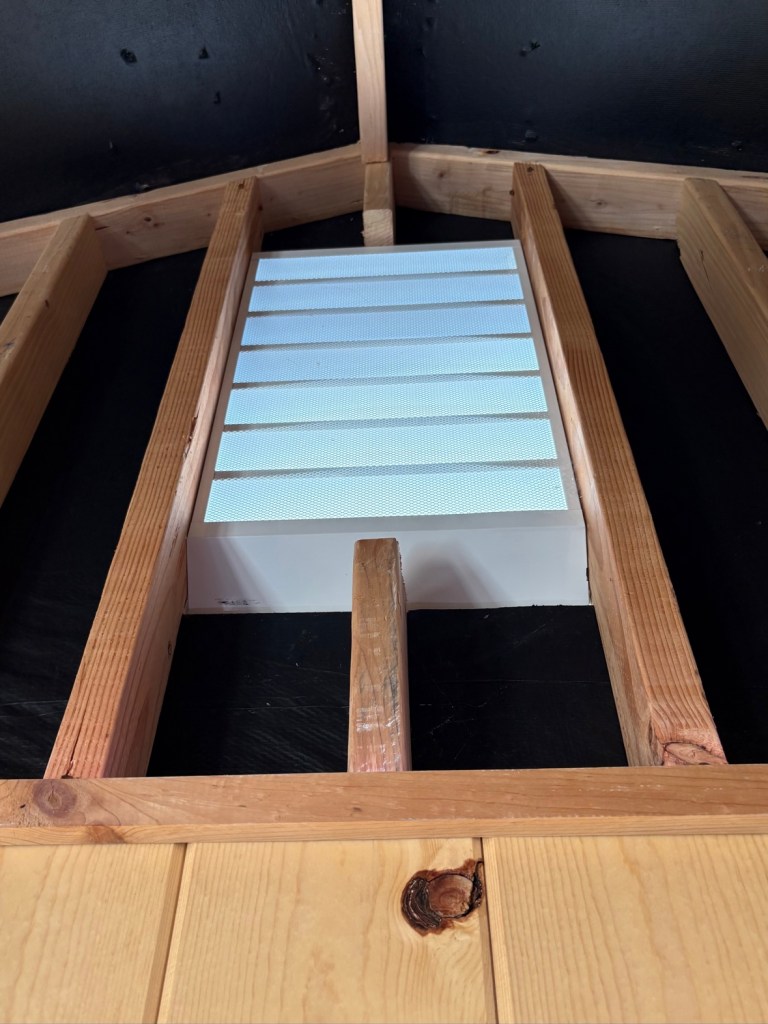
Two things changed. The shed now trades air with the outside, so damp air from a workout doesn’t sit there overnight. Inside humidity follows outdoor humidity instead of building on itself. And hot air that collects under the roof finally has a way out, with wind pushing air through from one vent to the other.
The trade-off: a vented shed doesn’t hold heated or cooled air well. That turned out to be fine, for reasons below.
On insulation and the open ceiling
The ceiling stayed open because I wanted the rafters showing — that was part of the look from the start (more in the walls post).
As for insulation: it’s not really necessary unless you’re insulating the entire interior. In a sealed, heated or cooled room, insulation slows heat moving through the walls. But this shed is vented and used an hour at a time, not lived in — the vents keep swapping air regardless, so most of the benefit would leak out. And insulation behind wood planks without a carefully installed vapor barrier can trap moisture inside the wall, which is the same condensation problem, just out of sight.
Taking the edge off
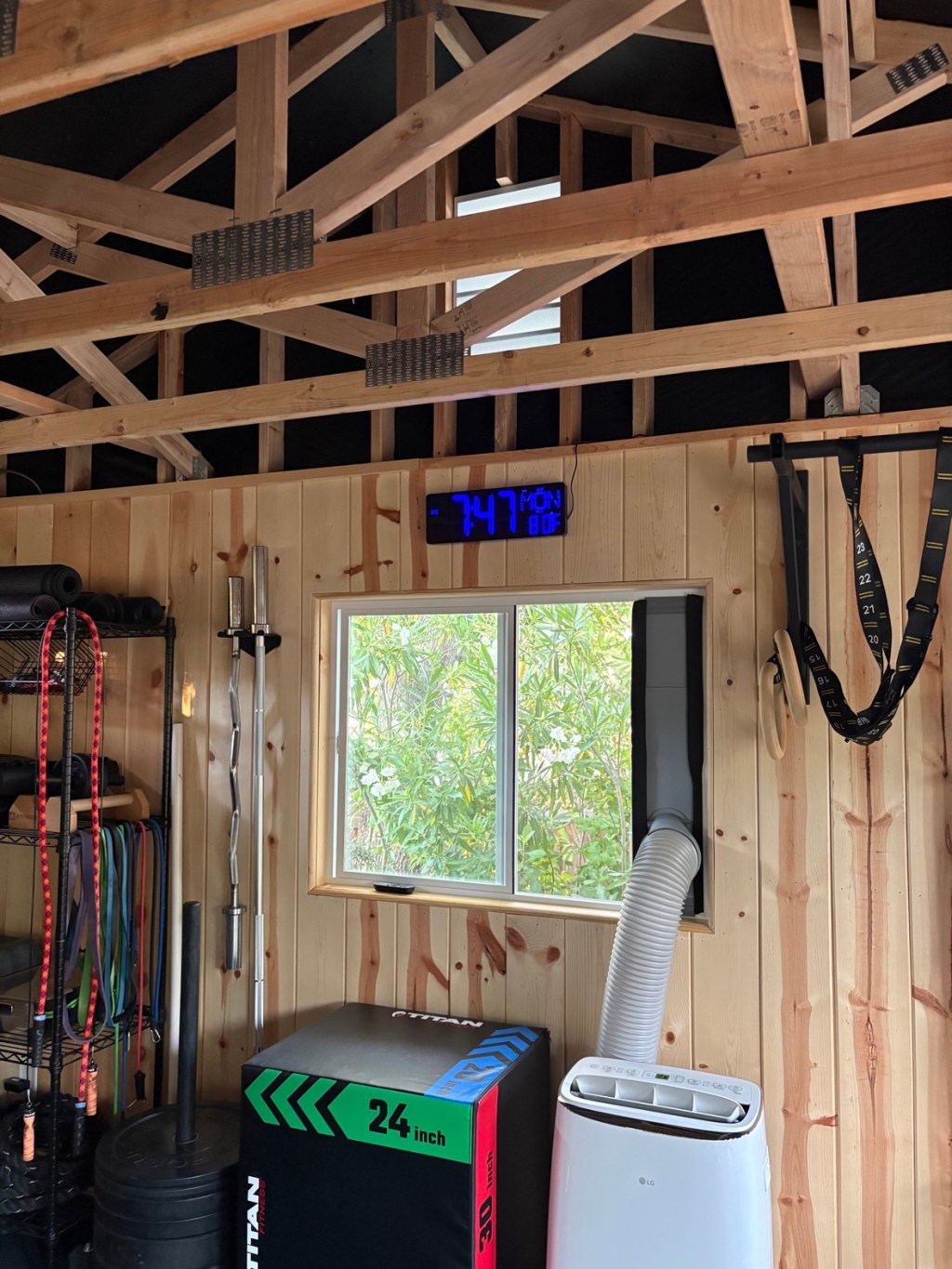
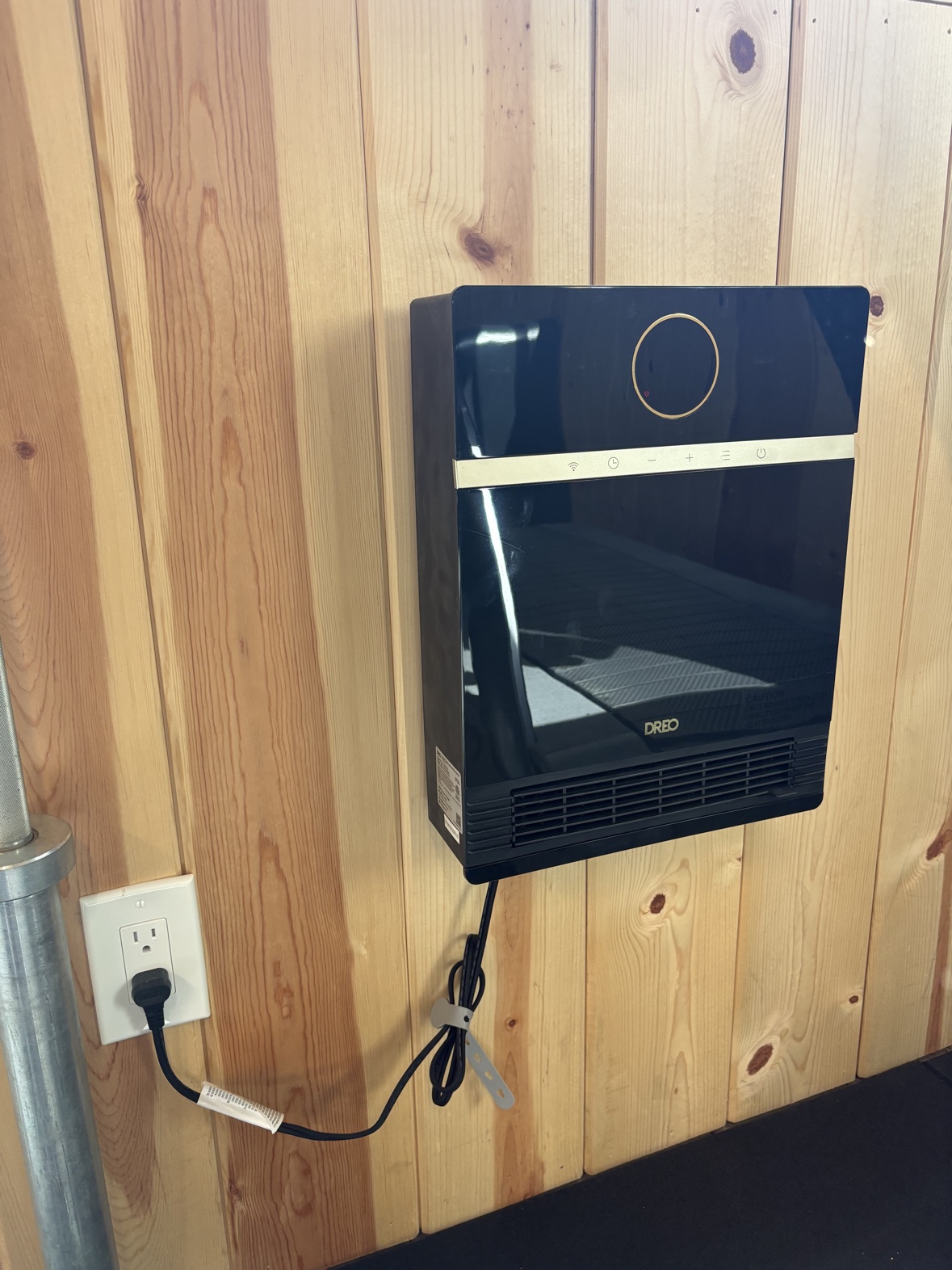
For the extremes I added a portable AC unit for summer and a wall heater for winter. Neither one tries to turn the shed into a house. They pull the hottest afternoons and coldest mornings back into a range where I can train.
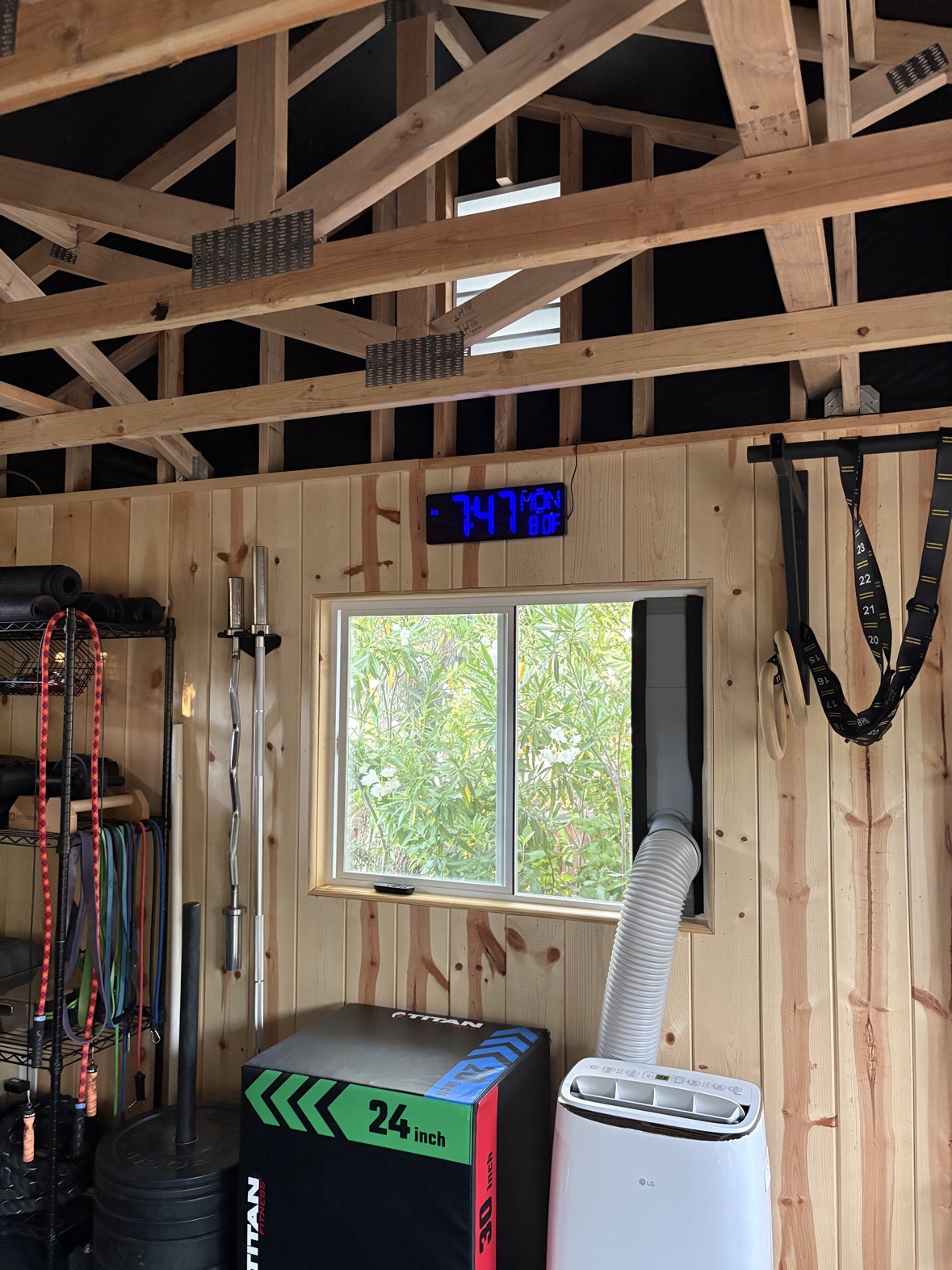
A few things I figured out along the way:
Run the heater before a winter session. Warming the air also lowers its relative humidity, which helps with the cold-metal problem.
Move the air, not just cool it. I put a fan on the wall opposite the AC, aimed down. The cold air reaches the far wall, gets pushed to the floor, and rolls back toward the AC instead of pooling in one corner.
I made sure to get SMART versions of the fan, AC unit and wall heater. The heater and fan can be turned on in advance from the DREO app (which is super slick by the way) and the AC unit can be turned on in the LG app. I use this about 20-30 minutes before I got into the shed.
Accept some loss. The vents leak a bit of cooled or heated air. That’s the cost of a shed that stays dry.
The floor and the gear
The shed sits on a concrete slab poured over a vapor barrier, which keeps ground moisture from wicking up through the floor. Rubber mats go on top. They protect the concrete and the equipment, and they keep plates and dumbbells off bare concrete, which stays cold long after the air has warmed up.
Where it landed
It still gets hot in summer and cold in winter. But it’s never unbearable, and the weights stay dry. In a California shed, the vents did most of the work. The AC and heater handle the rest.