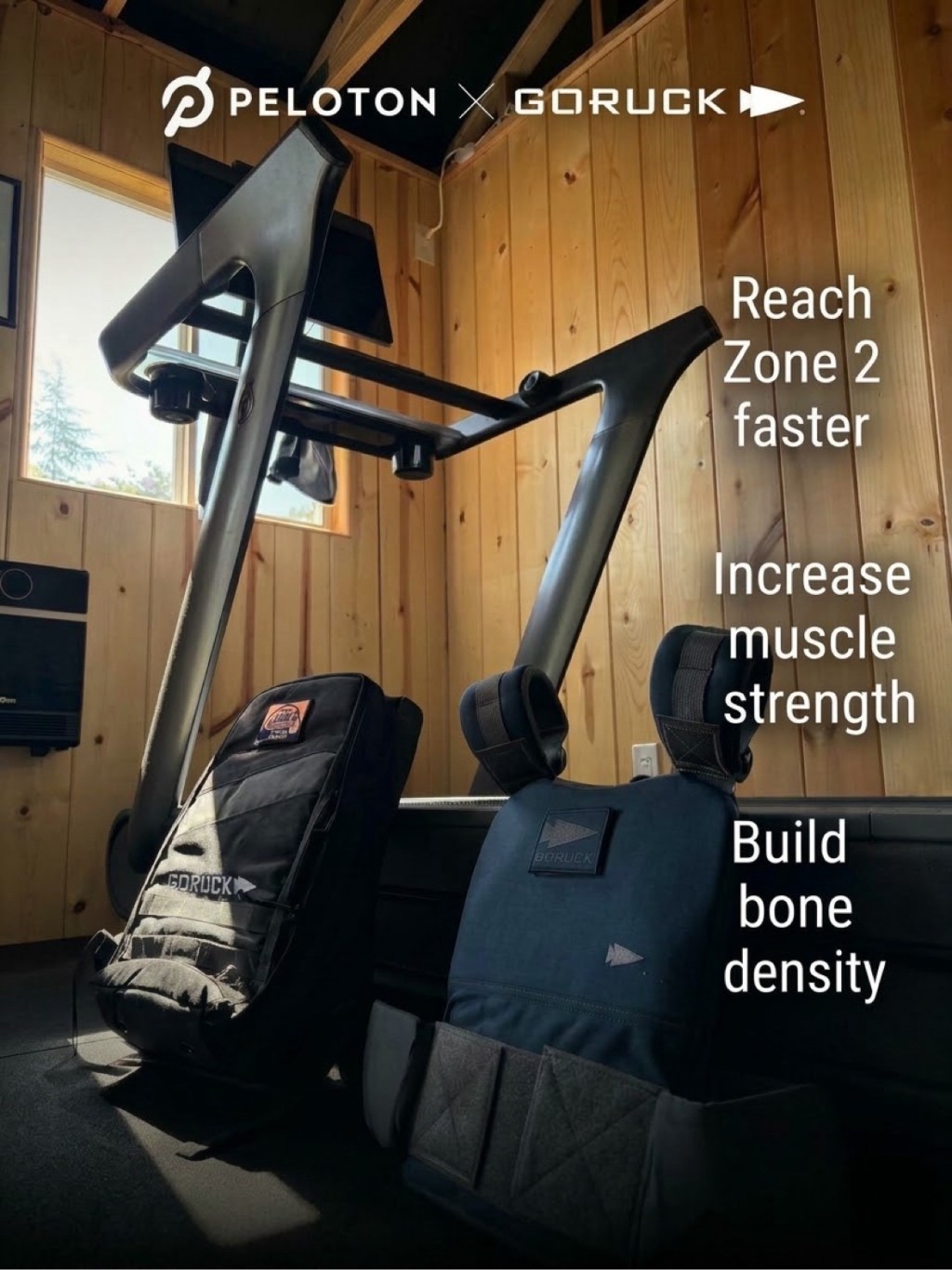
I’ve been doing most of my Zone 2 work on the Tread lately, and I wanted more out of those walks without turning them into runs. Enter the weighted vest — and the ruck bag. Here’s the setup, the why, and the Peloton classes built for it.
Why add weight to a walk
Walking is great, but for most of us it’s Zone 1 — a light stroll doesn’t get the heart rate where it needs to be for real aerobic gains. GORUCK’s take is simple: Zone 2 is 60–70% of max heart rate, the zone where your body burns fat for fuel and builds its aerobic base, and plain walking often isn’t enough to get you there and keep you there. Strap on weight and you reach Zone 2 at a conversational pace — no running required. Rucking also loads your shoulders, core, legs, and back, so it’s strength work smuggled inside cardio. (Source: GORUCK’s rucking for Zone 2 guide)
What Peloton says about weighted vests
Peloton’s own breakdown of weighted vest walking lines up: the added load can substantially increase calorie burn versus unweighted walking, builds muscle strength and bone density in the hips and spine (a big deal as you age), and raises heart rate and VO2 max without the joint pounding of running. It also forces more core engagement — free stability work.
The cautions are worth hearing: start with 5–10% of your bodyweight, keep your posture tall, warm up without the vest, and start at one or two sessions a week. Too much weight or a bad fit is how knees and backs get cranky. (Source: Peloton’s weighted vest walking guide)
A thought if you’re in a deficit
One finding caught my eye: a small 2018 pilot had older adults wear weighted vests daily while dieting, and there was a hint they preserved bone mineral density in the hips and spine better than diet alone. Honest caveat: it was 37 people, the benefit was a non-significant trend, and a larger 12-month trial (INVEST, JAMA Network Open 2025) found vests didn’t preserve hip bone density during weight loss. So treat this as a hypothesis, not a promise.
The logic still appeals to me: if you’re in a deficit — especially on a GLP-1, where weight comes off fast and takes lean mass with it (about 40% of semaglutide weight loss in STEP-1 was lean mass, with measurable hip bone loss) — giving your body a mechanical reason to hold onto bone and muscle is cheap insurance. Just keep perspective: resistance training plus enough protein is the proven way to protect muscle and bone in a deficit. Weighted walking is the companion, not the cure. Not medical advice, obviously.
The classes
Peloton has a dedicated set of weighted vest classes now. There’s no direct filter for them, so search “Weighted” in the app — the Weighted Vest Walks collection gathers them, including outdoor walks flagged to pair with a vest:
- Weighted Vest Walk (10–20 min) — Rebecca Kennedy, Susie Chan
- Weighted Vest Hike (20 min) — Kirsten Ferguson, Rebecca Kennedy
- Weighted Vest Standing Core (10 min) — Rebecca Kennedy
- Weighted Vest Low Impact Cardio (15 min) — Rebecca Kennedy
- Weighted Vest Bodyweight Strength (20 min) — Rebecca Kennedy
The hikes are the sweet spot on the Tread: incline plus load is a fast track to Zone 2.
The gear: ruck bag vs. weighted vest
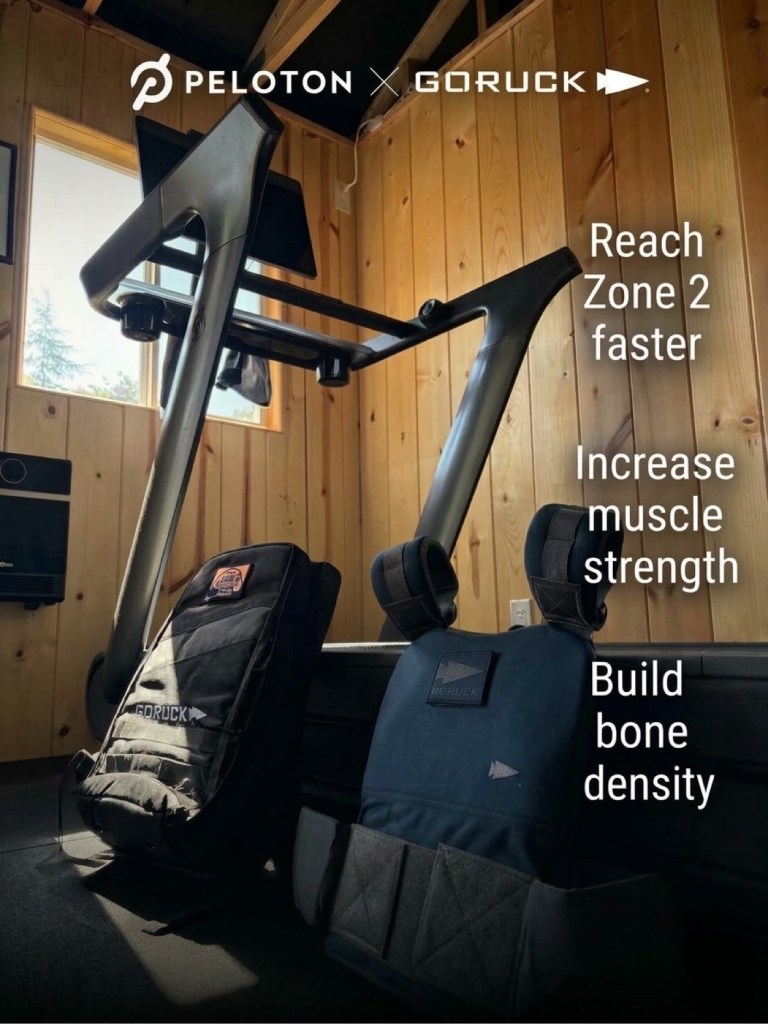
Two ways to carry the load. A ruck bag (a backpack with a weight plate) is the classic rucking setup — weight sits on your back, and your shoulders and core do the stabilizing. A weighted vest distributes the load evenly front and back and stays put, which I prefer on the Tread where there’s no terrain to think about.
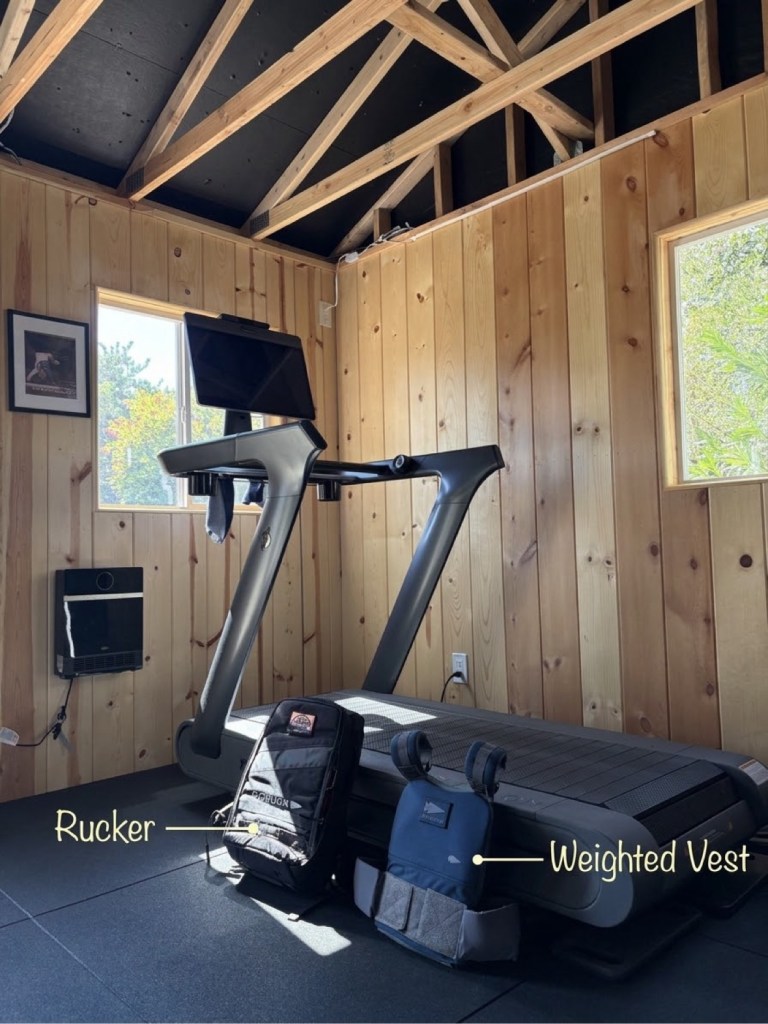
I’m using GORUCK for both — the stuff is overbuilt in the best way:
- GORUCK Rucker 4.0 — the purpose-built rucking backpack, with a dedicated plate pocket so the weight rides high and tight. $255.
- GORUCK Ruck Plate 10LB — cast iron plate sized for the Rucker. Start here; 10 pounds is plenty to feel it. $59.
- GORUCK Rucking Weighted Vest — adjustable, ergonomic, built for walking. $155.
- GORUCK Spy Ruck Women’s Weighted Vest — the women’s-specific version. $99.
How I’m using it
Simple: I mix it in to my routine — sometimes I’ll throw it on for a regular walk or a hike just to get a better workout. It’s not something I do all the time, just something I mix in for the functional fitness gains.